



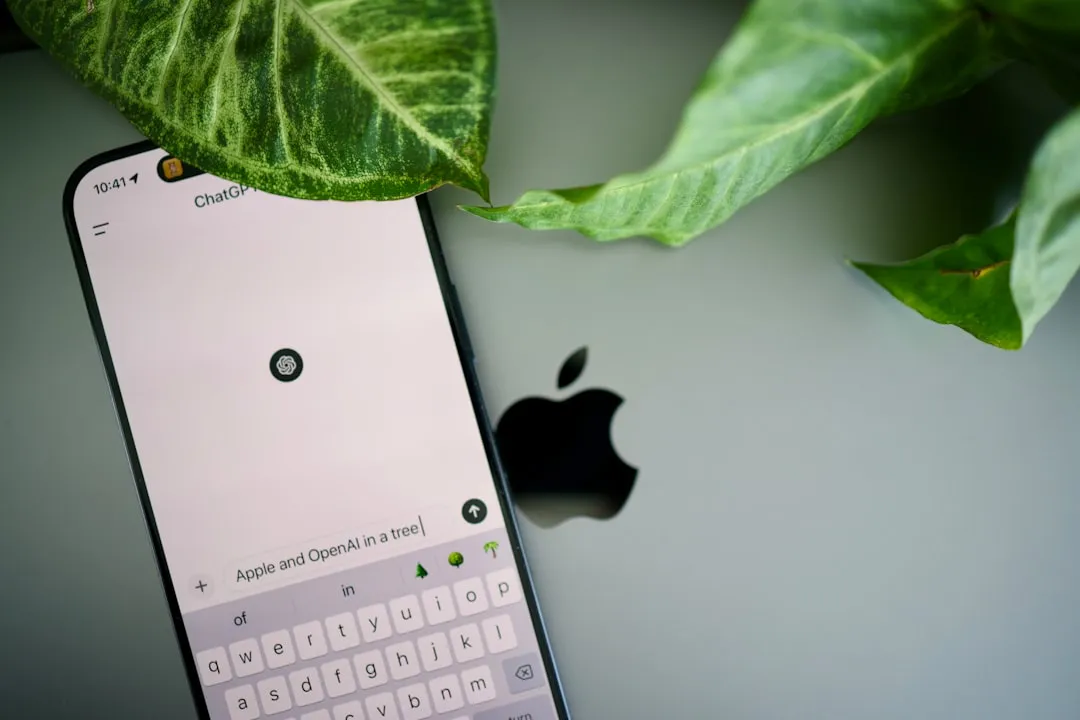
OpenAI iPhone Killer Rumors Explained: Why the Speaker Comes First
The phrase "iPhone killer" has a long and undistinguished history. It gets applied to products that either never ship, or ship and quietly disappear. So when supply-chain analyst Ming-Chi Kuo posted claims today that OpenAI is in discussions with Qualcomm and MediaTek to develop custom smartphone chips, the label arrived immediately. The OpenAI iPhone killer narrative was born before any hardware has been announced or independently verified.
That framing isn't just premature. It actively obscures the more interesting story, which is about sequence and strategy, not specifications.
What the actual reporting shows is this: OpenAI's first product is a camera-equipped smart speaker, priced around $200-$300, designed with Jony Ive and reportedly reportedly targeted for an early-2027 launch. A possible OpenAI smartphone wouldn't reach mass production until 2028, if Kuo's timeline holds. Those two data points aren't separate bets. They look like stages in a single strategy, and the first stage is where the real test begins.
A note on what this analysis is working from: Kuo's smartphone chip claims rest on a single analyst's post on X, relayed by Computerworld. The home device details come from anonymous sources cited by 9to5Mac two months ago. Neither OpenAI, Qualcomm, MediaTek, nor Jony Ive's team has confirmed any of this. That asymmetry runs through everything that follows.
What is actually reported: a factual inventory
Start with what's on the record, such as it is.
The home device is described by sources with direct knowledge as a smart speaker with a built-in camera capable of taking in information about its surroundings, including items on a nearby table and conversations happening in the vicinity, and building awareness of users over time, per 9to5Mac. The same sources say it would support purchases authenticated through facial recognition similar to Apple's Face ID. That last detail positions it less as a voice assistant and more as a transactional agent installed in a room.
Beyond the speaker, two other form factors are reportedly in active development: smart glasses and a smart lamp. The lamp gets no further detail in available reporting. What matters about all three is the pattern they suggest together: presence across multiple surfaces of daily life, not a single hardware bet on one category.
The OpenAI Qualcomm MediaTek smartphone chip claim sits in a different evidentiary bucket entirely. Kuo's post, as Computerworld reported today, claims OpenAI is exploring custom SoC development with Qualcomm and MediaTek, with hardware specifications not expected to be finalized until early 2027 and mass production targeted for 2028. The available reporting does not connect this chip work to the Jony Ive device roadmap in any confirmed way. The link between them is inferential.
What the record does not contain: a confirmed operating system, a manufacturing partner beyond the discussion stage, a distribution or carrier strategy, or any evidence that the home device and OpenAI smartphone silicon efforts are parts of a single coordinated plan. Gaps that large matter when evaluating what comes next.
Why the OpenAI smartphone rumors matter less than OpenAI Jony Ive hardware right now
Kuo's argument deserves to be understood on its own terms before being evaluated. His central claim is that AI agents will replace apps as the primary way people interact with devices, and that transition will require hardware built specifically for it: faster on-device inference, tighter cloud AI integration, real-time context processing, per Computerworld. Custom silicon, on that thesis, is infrastructure for a new interface layer, not just a performance upgrade.
If that's the bet, the home speaker is the first test. A camera-equipped ambient device that observes context and completes transactions via facial recognition is exactly the kind of environment where an agent-driven interface could operate without competing directly with a smartphone's app ecosystem. Expectations are calibrated differently. The design surface is open. Users interact with a room device without the habits and muscle memory that make smartphones sticky. It's a viable environment to learn whether people will actually accept AI agents managing their context before the strategy requires a $999 phone.
The agent-lock-in thesis is the hinge the entire competitive argument turns on, and it needs scrutiny. Today's iPhone switching costs are built on app investment, data, and ecosystem interoperability. If AI agents genuinely replace apps as the primary computing interface, those switching costs shrink, and the platform advantage shifts toward whoever builds the most capable AI rather than the largest app store. That would materially change Apple's competitive position.
For that logic to hold, several conditions would have to be true simultaneously. Agents would need to become capable enough to replace app-based workflows for most users. Users would need to accept that shift. And OpenAI would need to establish its agent platform before Apple, Google, or Samsung closes the window. None of those conditions is established today. The home device, if it ships and functions as described, would be early evidence for or against the first condition. The smartphone effort, if it materializes, would test the second and third.
Why ambient AI hardware has a poor track record, and what's different this time
Before treating the home speaker as a logical stepping stone, it's worth asking whether ambient AI hardware has ever actually worked as a platform foundation. The answer is mostly no, and the reasons are instructive.
Voice assistants trained an entire generation of users to expect shallow utility. Alexa and Google Assistant arrived with genuine ambition, and both found a ceiling fast. The core problem was that the interface, audio in and audio out, constrained what agents could actually do. Complex tasks broke. Users learned to ask simple questions and stopped expecting more. By the time the devices were embedded in millions of homes, they had been mentally categorized as glorified timers and music players. Recovering from that perception has proven harder than anyone anticipated.
Smart home devices ran into a related but distinct problem: fragmentation and trust. The category produced dozens of competing protocols, incompatible ecosystems, and a persistent user experience that required technical patience most consumers don't have. Trust was the deeper issue. Putting a microphone in a room is already a concession. Putting a camera there is a different ask entirely. That distinction matters enormously for what OpenAI is reportedly proposing.
Hardware without a durable developer ecosystem has also tended to become a feature rather than a platform. Amazon's smart display line added screens, cameras, and more processing power over years of iteration, but the developer community around Alexa never coalesced into the kind of third-party ecosystem that made iPhone sticky. The device remained useful; it never became essential.
What's potentially different in OpenAI's case is the underlying capability of the AI and the specific interface bet. Facial recognition for transactions, contextual awareness built from ambient observation, and autonomous task completion are a different proposition from "ask it the weather." Whether that capability is mature enough to clear the utility bar on day one is unknown. But the home speaker, if it ships, would be the first real-world test of whether the capability gap between today's AI and the voice assistants that disappointed users is wide enough to change behavior. That's a meaningful threshold, and it hasn't been cleared anywhere yet at consumer scale.
The execution barriers: why Apple's position is harder to displace than the strategy suggests
Grant the agent-interface thesis for a moment and the execution problem is still substantial.
On raw hardware, by the time any OpenAI smartphone could reach consumers in 2028, Computerworld argues Apple will likely be shipping devices built around 1.4nm process chips, meaningfully faster and more power-efficient than what's available today. Custom Qualcomm or MediaTek silicon optimized for AI workloads would enter a market where Apple's chip advantage has had two more years of compounding behind it. The competition doesn't stand still while the challenger builds.
The ecosystem problem compounds this. Apple's services layer, covering payments, storage, subscriptions, and device continuity, is embedded deeply enough in daily behavior that switching a device means more than learning a new OS. It means unwinding a web of habits and transactions built over years. OpenAI's home device would need to establish enough utility, and enough trust, to become a genuinely preferred surface before that inertia becomes relevant.
Then there's the privacy question, and it isn't a footnote. A device that takes in ambient conversations, observes objects in a room, and authenticates purchases through facial recognition is not a neutral appliance. It's a surveillance proposition. Consumer acceptance of that feature set is unproven, and the regulatory environment for always-on AI cameras in domestic spaces is unsettled across major markets. If this category runs into significant regulatory friction, whether in the EU, California, or elsewhere, the ambient-computing strategy faces a constraint that no chip partnership resolves. This is the barrier the agent-lock-in thesis tends to skip past.
None of these barriers are insurmountable in principle. All of them require things to go right that haven't been proven yet.
What to watch: the signals that separate a platform play from a hardware experiment
The difference between OpenAI seeding a genuine AI platform and releasing a series of well-designed gadgets will show up in a specific sequence of events.
First-device execution and agent capability. Does the home speaker ship on schedule? Does it demonstrate actual agent functionality, meaning autonomous task completion and context persistence, rather than voice commands with a better model behind them? That would be the first real evidence the interface thesis has legs.
OS and software stack disclosure. Custom silicon is only meaningful if it runs software that couldn't run as well elsewhere. Any public indication of what operating system or AI runtime these devices use, whether OpenAI is building a proprietary stack or layering on an existing platform, would clarify whether this is a platform in development or a product line.
Developer and payment ecosystem signals. Platforms need developers, or their agent-world equivalent. If OpenAI announces APIs, agent frameworks, or payment infrastructure tied to these devices, that's evidence of platform intent. If it doesn't, the devices remain endpoints, not a foundation.
Manufacturing confirmation beyond chip discussions. Moving from an analyst claim that remains unconfirmed to actual SoC development agreements, OEM partners, or foundry relationships would indicate the OpenAI smartphone effort is real rather than exploratory. Until that confirmation exists, the smartphone story is one analyst's post relayed through a single outlet.
What the sequence actually tells us
Two facts anchor this analysis. OpenAI's first product is a $200-$300 ambient speaker arriving next year, not a smartphone, per 9to5Mac. A possible OpenAI smartphone wouldn't reach mass production until 2028, a year after the iPhone's twentieth anniversary, according to Kuo's claims as Computerworld reported them today.
That's a staged strategy with a long runway and unproven assumptions baked into every stage. The smartphone headlines are getting the attention, but the home speaker is where the actual argument gets made or lost.
If the speaker fails, or ships to indifference, the "agents replace apps" thesis weakens as a consumer hardware story. Developers won't build for a platform users haven't adopted. The OpenAI hardware roadmap would likely contract rather than expand. But if the speaker succeeds, the meaningful shift isn't that OpenAI is building toward a phone. It's that AI gets a physical foothold in the home before it earns a place in the pocket. That sequence, ambient device first, portable device second, is how the switching-cost argument against Apple actually has room to develop.
Watch the launch. Watch whether it demonstrates something a HomePod or Echo genuinely can't. The phone rumors will still be there in 2027 when specs are reportedly due to be finalized. Right now, this is a story about a speaker.




Comments
Be the first, drop a comment!