



Siri AI Delay in the EU: What Apple Says and What's Confirmed
Apple gave EU iPhone and iPad users a concrete reason to notice the Digital Markets Act earlier this month: Siri AI will not be available on iOS 27 or iPadOS 27 in any of the 27 EU member states when those releases ship later this year, with no timeline for when that changes, according to Apple's newsroom. Apple's marketing chief Greg Joswiak escalated that framing this week, calling the Siri AI EU launch delay the "most serious negative outcome yet" of the Digital Markets Act, Euractiv reported. That is Apple's characterization, not a settled verdict.
Two things are confirmed: the product delay is real, and Apple says the European Commission rejected every proposed fix. What remains unverified is Apple's account of why the Commission has not publicly confirmed or rebutted the specific claims Apple is making about the negotiations or about what the DMA actually requires.
What follows covers what EU users and developers concretely lose, Apple's stated explanation for the impasse, what Apple says it proposed and what happened to those proposals, and a platform asymmetry Apple has not yet explained publicly.
What EU users and developers lose with iOS 27
When iOS 27 and iPadOS 27 ship, EU users will be locked out of the full Siri AI feature set announced at WWDC26, including a dedicated conversation history app, expanded Visual Intelligence, camera-integrated Siri mode, and AI writing tools, Apple confirmed. The specific capabilities matter less than the category: Siri AI is Apple's primary AI interface on iPhone, and EU users will have none of it at launch.
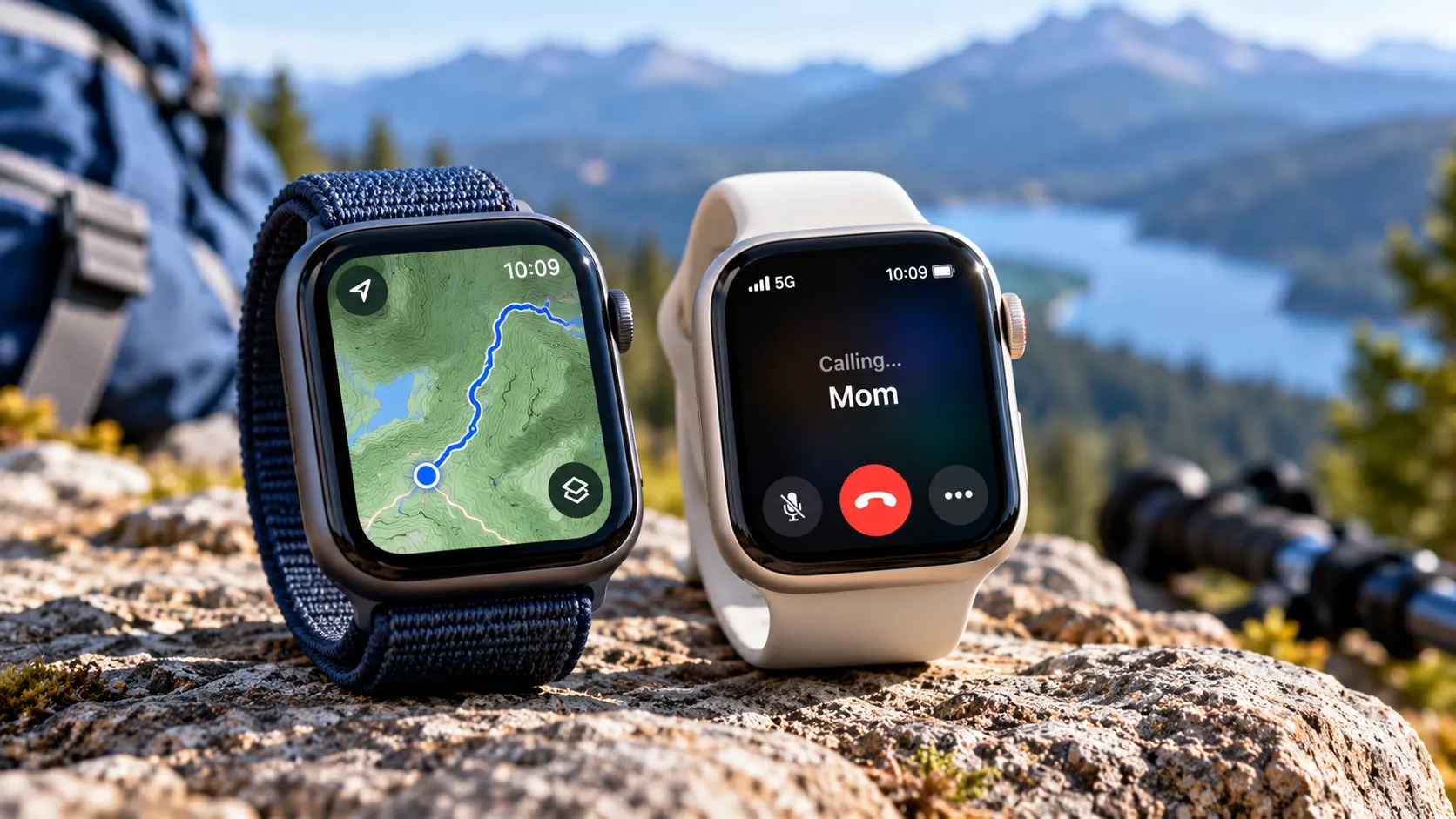
Apple Watch compounds the loss in a way that requires no separate DMA dispute. Because Siri AI on watchOS 27 requires a paired iPhone running Siri AI, EU users are blocked from the wearable experience as a downstream consequence, per Apple's announcement. The watch simply inherits the iPhone's restriction.
The developer impact is the least visible consequence and potentially the most durable. EU-based developers will have no access to Siri AI APIs on iOS 27, iPadOS 27, or watchOS 27, meaning they cannot build or test Siri AI integrations for their apps while developers outside the EU can, Apple stated. That split does not close on its own.
Why Apple says the DMA caused the Siri AI EU launch delay
Apple's central claim is that the European Commission's reading of the DMA would require granting any third-party AI system near-unrestricted access to a user's device, including reading and sending messages, initiating purchases, accessing files, and executing actions across any installed app, all without requiring ongoing user oversight, according to Apple. This is Apple's interpretation of what the regulation demands, not a position the Commission has publicly stated in those terms.
Joswiak put the stakes plainly at a press briefing this week: "I cannot imagine, actually, anything more concerning for privacy and security than opening up an entire operating system to a third-party system," while also insisting that Apple strongly supports interoperability in principle, The Verge reported. The distinction Apple is drawing is between controlled interoperability it designs versus mandated deep-access it says it cannot secure. That is a meaningful distinction, if the characterization of what the Commission is demanding is accurate.
Apple also invokes a specific threat model, claiming security researchers have already demonstrated that AI systems can be compromised to steal passwords and photos, or to alter files and account settings without user consent, and that these risks are growing as AI systems gain more autonomy, per Apple's newsroom. No named studies or independent expert assessments appear in the available sourcing; these claims are Apple's, attributed to unnamed researchers.
The clearest summary of where Apple says this leaves it came from Joswiak: "We do not currently have a solution that we can engineer for," The Verge reported.
The proposed fix Apple says the Commission rejected, and the platform split that raises questions
Apple says it developed a potential resolution called the Trusted System Agent, an intermediary layer designed to give competing virtual assistants access to the same device capabilities as Siri AI, but through a controlled gateway rather than direct system access, per Apple's announcement. Apple also offered to launch Siri AI in the EU immediately, with the Trusted System Agent framework phased in over 18 months, a proposal it framed as giving regulators a working compliance path while protecting users in the interim.
The European Commission rejected every proposal Apple put forward, according to Apple. Joswiak said the delay is "not some sort of effort for us to be punitive over our feelings for the DMA" and that Apple "worked very hard to try to avoid this outcome," The Verge reported. What the Commission's actual objections were, and whether it characterized the negotiations the same way, is not in the available sourcing. Apple describes the Commission as refusing to "engage constructively"; that framing belongs to Apple, not to any documented regulatory statement.
There is one obvious unanswered question Apple has not publicly addressed: EU users will get Siri AI on macOS 27 and visionOS 27, but not on iPhone, iPad, or Apple Watch, Apple confirmed. Apple has offered no public explanation for why the same privacy and security architecture it built on macOS can coexist with Siri AI in the EU while the iOS version cannot. That gap does not disprove Apple's argument. It is, however, a question regulators will press, and one Apple will need to answer publicly if its privacy framing is to be read as something other than a negotiating position.
What the evidence actually supports
The practical situation is confirmed: EU users on iPhone, iPad, and Apple Watch will not have Siri AI when iOS 27 ships, EU developers lose API access that developers elsewhere will have from day one, and Apple says there is no timeline for a resolution, per its newsroom.
What is less settled is whether this outcome reflects a genuine technical and privacy impasse, a negotiating position, or some combination. Apple's account is internally consistent: it identifies a specific conflict, proposed a named solution with a named timeline, and describes a breakdown. But it is entirely one-sided. Craig Federighi said Apple hopes to "eventually" bring Siri AI to EU iPhone and iPad users and will continue engaging with regulators, according to Apple. That is not a timeline, and it is not a commitment.
Joswiak called this the most serious consumer harm the DMA has produced so far, Euractiv reported. Whether that framing holds depends on facts not yet public. Watch for three things: any Commission statement on why it rejected the Trusted System Agent, technical disclosures that clarify what the gateway actually does, and whether Apple produces a public explanation for why macOS escapes the constraint that blocks iOS. Until then, Apple has made its strongest public case yet, and the other side has not responded.





Comments
Be the first, drop a comment!