



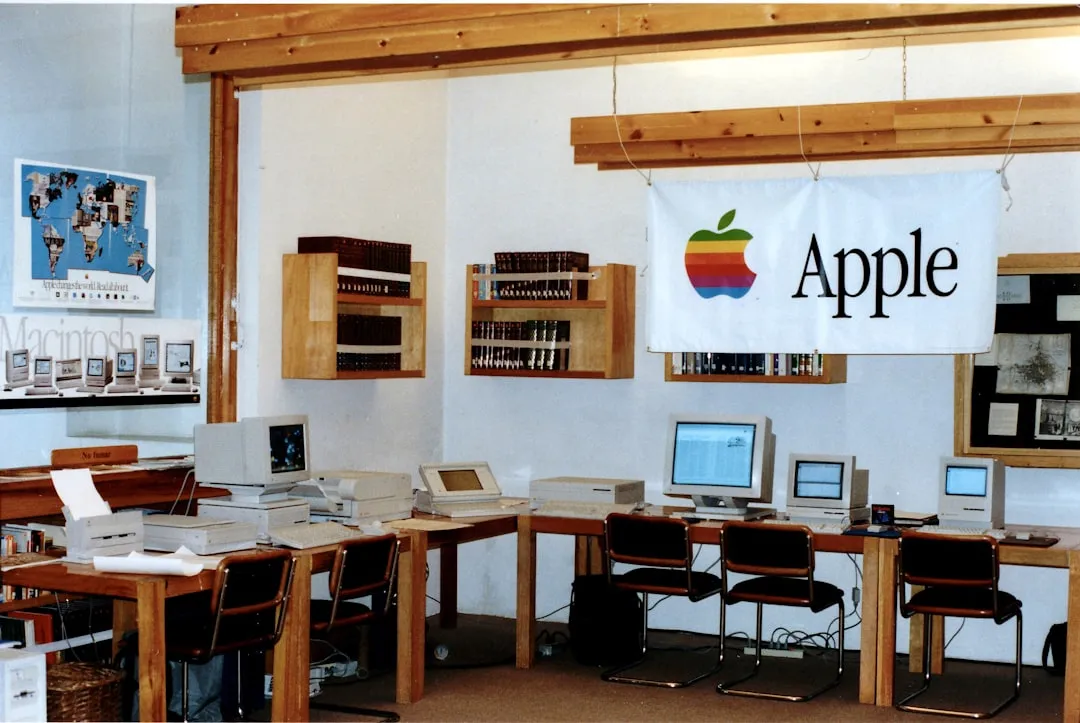
The advertising world has lost one of its most influential voices. Steve Hayden, the creative mastermind behind Apple's legendary "1984" commercial, passed away at 78 on August 27 in Patchogue, New York. Now here's the thing—this isn't just about losing a talented copywriter. We're saying goodbye to someone who fundamentally changed how we think about technology advertising, someone who helped convince the world that personal computers weren't just for techies and corporations.
Hayden's career spanned decades and included groundbreaking work that redefined brand positioning across multiple industries, but his collaboration with director Ridley Scott and creative director Lee Clow on that iconic 60-second spot remains his defining achievement. What's remarkable is that the commercial aired only once during the Super Bowl on January 22, 1984, yet it established the template for how tech companies could position themselves as agents of liberation and change. You might be wondering—how does a single commercial achieve that level of cultural impact? The answer lies in Hayden's unique ability to see beyond product features and tap into fundamental human desires for freedom and empowerment.
The man who made advertising history
What made Steve Hayden's approach so revolutionary? It starts with understanding the impossible creative challenge he embraced. When Steve Jobs challenged the Chiat/Day agency in 1983 to create something that would "stop the world in its tracks," most creatives would have been paralyzed by the pressure. Hayden saw it as an opportunity to craft something genuinely transformative.
The resulting commercial featured a female runner destroying a giant screen showing a Big Brother-like figure, which audiences immediately understood as a direct challenge to IBM's dominance in the computer market. But here's what separates good advertising from legendary advertising: the meticulous craft and historical authenticity that made viewers feel the weight of the liberation message.
Hayden didn't just create a dystopian scene—he built it with scholarly precision that elevated the entire concept. He crafted the dictator's speech using actual quotes from historical figures like Mussolini, Mao Zedong, and Hitler, creating an authentically chilling atmosphere that made the runner's hammer throw feel like genuine revolution rather than mere product promotion. That level of research and commitment to historical accuracy transformed a commercial into a cultural statement about technology's democratizing potential.
The impact was immediate and enduring. The ad won a Clio Award and the Grand Prix at Cannes, but the real validation came when Advertising Age named it the greatest television commercial of all time in 1995. As media scholar Robert Thompson noted, the ad transformed Super Bowl commercials into "little movies with a highbrow edge," establishing the cinematic storytelling approach that defines premium brand advertising today.
Of course, lightning doesn't always strike twice. Hayden learned this lesson with "Lemmings," the 1985 follow-up that demonstrated how easily the formula could misfire. The somber sequel showed blindfolded executives jumping off a cliff while whistling "Heigh Ho", another shot at IBM that lacked the aspirational vision that made "1984" so compelling. As Hayden himself reflected, "What was missing from 'Lemmings' was the girl in '1984,' the savior who says, 'The world could be different than this.'" This insight reveals his deeper understanding of persuasive storytelling: audiences need hope, not just criticism.
From musical aspirations to Madison Avenue mastery
Hayden's journey to advertising greatness began in an unexpected place—and his artistic foundation explains much about his later creative sophistication. Born in St. Charles, Missouri, in 1947, he grew up in San Jose, California, where his father worked as an internist and his mother was an opera singer and church organist. This early exposure to musical composition and dramatic performance would prove crucial in developing his sense of rhythm, emotional crescendo, and narrative timing that made his commercials so compelling.
He initially pursued music seriously, studying cello at the prestigious Interlochen Arts Academy in Michigan before earning an English degree from USC in 1968. His musical training taught him to think in terms of movements, themes, and emotional progression—skills that directly translated to his approach of crafting commercials as complete dramatic experiences rather than simple product demonstrations.
The transition to advertising was inspired by recognizing exceptional creative work. He was captivated by Volkswagen's famous "Think Small" campaign, which showed him how advertising could be both intellectually sophisticated and emotionally resonant. This wasn't just career inspiration—it was a creative awakening that connected his artistic training to commercial communication.
The seed for his career had actually been planted much earlier through an offhand comment that became prophetic. A high school teacher's observation about his potential as a "clever phrasemaker" had stuck with him—Hayden realized people would actually pay for that skill. What the teacher saw as a potential limitation, Hayden understood as a marketable strength: the ability to distill complex ideas into memorable, persuasive language.
He started as a junior copywriter at McManus, John & Adams in Detroit, working on the General Motors account. This automotive work taught him about reaching mass audiences and communicating technical innovation in accessible terms—experience that would prove essential when he later tackled personal computers. From there, he progressed through several agencies, developing the strategic thinking and audience psychology expertise that would eventually revolutionize tech advertising.
Beyond Apple: shaping brands across decades
While the "1984" ad defined his legacy, Hayden's influence extended far beyond that single moment of brilliance. After moving to BBDO in 1987, he reunited with the Apple account and became chairman and CEO of BBDO West, where he demonstrated that Apple's rebellious spirit could be adapted to different products and market contexts while maintaining the core message of creative empowerment.
But the real test of his strategic versatility came with an ironic career twist that could only happen in the advertising world. In 1994, he joined Ogilvy & Mather to take on what many considered an impossible challenge: revitalizing IBM's image during the largest account consolidation in advertising history. The man who had positioned Apple as the rebel against Big Brother IBM was now tasked with making IBM lovable again. This challenge required completely inverting his creative approach while maintaining his strategic brilliance.
Under his creative leadership, Ogilvy developed IBM's transformative "e-business" campaign in the late 1990s, repositioning the company from a hardware dinosaur to a comprehensive digital solutions provider. Where Apple had been the scrappy innovator, IBM became the reliable guide through technological complexity. Hayden's genius lay in understanding that IBM's strength was its breadth and stability—the exact opposite of Apple's insurgent positioning, but equally valuable to businesses navigating digital transformation.
His versatility showed again with the quirky and popular "Hello Moto" campaign that helped rejuvenate Motorola's image in the early 2000s. This campaign demonstrated his ability to inject personality and cultural relevance into technology brands, making mobile phones feel personal and expressive rather than purely functional. Each campaign built upon his core insight that technology advertising succeeds when it focuses on human transformation rather than technical specifications.
The lasting impact of a creative visionary
Steve Hayden's death marks the end of an era in advertising, but his influence on how we communicate about technology remains profound and increasingly relevant. His "1984" commercial didn't just launch the Macintosh—it helped establish the template for Super Bowl advertising as cinematic storytelling and positioned technology companies as forces for creative liberation rather than corporate conformity. This framework continues to influence how companies from Tesla to AI startups position themselves as agents of positive change.
The ad's cultural success demonstrated something crucial about the technological moment we were entering. It showed that consumers were ready to see personal computers not as intimidating business machines, but as tools for individual empowerment. This perceptual shift helped launch the personal computer revolution that transformed how we work, create, and connect. In many ways, Hayden didn't just advertise the future—he helped create it by changing how people imagined their relationship with technology.
What truly set Hayden apart was his remarkable ability to distill complexity into clarity without sacrificing sophistication. Former Ogilvy CEO Shelly Lazarus recalled his talent for reducing "14 hours" of client briefings to just two words. This wasn't just efficiency—it was the kind of strategic thinking that identifies the essential human truth within even the most technical products. In today's world where AI and emerging technologies often seem impenetrable to regular consumers, Hayden's approach offers a masterclass in making the complex accessible and compelling.
His colleagues remember him not just as a brilliant strategist, but as someone who elevated creative standards across the industry. As Lazarus reflected, "Steve made it look easy. But there was brilliance behind every seemingly simple idea." That combination of intellectual rigor and effortless execution created work that transcended traditional advertising to become cultural touchstones that continue influencing how we think about technology's role in society.
Hayden leaves behind his longtime partner Kristy Allen and brother David, along with a creative legacy that offers timeless lessons for today's marketers. His work reminds us that the most powerful technology advertising doesn't focus on features or specifications—it helps people envision how their lives could be different and better. In our current era of AI, VR, and emerging technologies that often seem as foreign as personal computers did in 1984, that vision feels more essential than ever.










Comments
Be the first, drop a comment!