





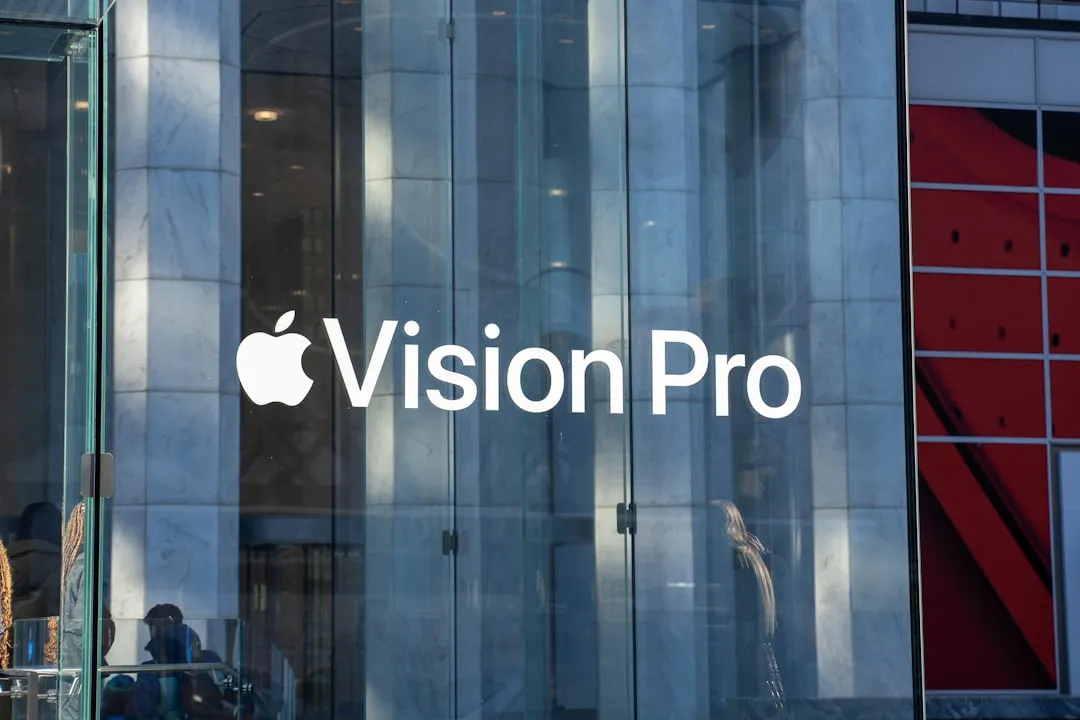
The Apple Vision Pro has become something of a tech industry case study in 2024—but not for the reasons Apple hoped when it launched this ambitious spatial computing device. While the company continues to champion its revolutionary mixed-reality headset, recent production halts and dramatically reduced sales forecasts tell a different story.
Here's the uncomfortable truth that nobody wants to say out loud: the tech analyst community seems almost relieved by these struggles. It's not that they want Apple to fail—it's that the Vision Pro's trajectory validates their long-held skepticism about premium mixed-reality devices and justifies their cautious stance on spatial computing investments.
The numbers tell a sobering story
Let's break down what's actually happening with Vision Pro sales, because the decline reveals more about market dynamics than Apple initially anticipated. Apple reportedly targeted an ambitious 3 million units for the first year, but reality hit hard when analysts' early sales estimates landed around 200,000 units. The company supposedly quickly revised expectations down to 900,000 units, yet even that proved wildly optimistic.
What makes these numbers particularly striking is how they reflect broader industry resistance to premium XR devices. IDC forecasts the device won't cross 500,000 sales this year, with some estimates suggesting as few as 400,000 units will actually find buyers. For context, that represents selling roughly one-eighth of Apple's original projections—a miss that signals fundamental misalignment with consumer demand rather than typical new product growing pains.
The production story reveals Apple's internal recognition of this reality. Apple began scaling back manufacturing in early summer, with assembly partner Luxshare reportedly reducing output to just 1,000 units per day by October—a 50% cut from peak levels. By November, Apple instructed Luxshare to wind down production altogether, leaving the company with inventory estimated between 500,000 and 600,000 units—enough to meet expected demand through 2025 without manufacturing another device.
This isn't just about missed sales targets—it's about validating years of analyst predictions about the limited appeal of premium mixed-reality hardware.
Why analysts are rooting for failure
Here's where the analyst motivation becomes clear: industry watchers built their reputations predicting that premium mixed-reality devices would struggle with mainstream adoption, and Apple's difficulties provide public vindication of those positions. Having spent years arguing that AR/VR technology needed to be lightweight, affordable, and seamlessly integrated into daily workflows, analysts now have a $3.5 billion case study supporting their caution.
When the consumer VR market declined 10% in 2024 despite the Vision Pro's launch with Apple's full marketing muscle behind it, this reinforced existing narratives about fundamental technology limitations. The $3,499 price point becomes convenient ammunition, but there's deeper strategic validation at play. Apple CEO Tim Cook characterized the device as an "early-adopter product" from the beginning, yet analysts continue judging it by mass-market metrics—creating impossible standards that justify their skeptical stance.
This dynamic serves broader industry narratives. Research firm IDC estimated Vision Pro sales would be under 500,000 units in 2024, treating this as validation of their conservative projections rather than acknowledging it might represent successful penetration of a nascent premium market. The broader XR industry benefits from this framing—IDC projects that Vision Pro and competing devices could drive XR hardware shipments to 40M+ units per year by 2026, but if the flagship premium device struggles, it supports arguments for focusing on lower-cost alternatives and enterprise applications where analysts have been more optimistic.
PRO TIP: Watch how analyst reports frame Vision Pro struggles as validation of their existing predictions rather than exploring what this reveals about the gap between technical capability and market readiness.
Technical achievements vs. market reality
The disconnect between Vision Pro's genuine innovation and market reception illustrates why analyst skepticism feels justified—even breakthrough technology can't overcome fundamental adoption barriers. The M5 chip delivers 50% faster performance for graphics and machine learning tasks, while the new headband improves weight distribution for longer sessions. Battery life now extends to over 2.5 hours, finally reaching what reviewers call "watch any movie you want" territory.
Yet these impressive technical advances haven't driven adoption because they don't address the fundamental questions analysts have been raising about spatial computing's place in daily workflows. Content remains light, and developer support tepid, with notable gaps like Netflix and YouTube apps still missing nearly two years after launch. More telling, the content cadence for the first year was disappointing, failing to deliver compelling experiences that justify premium pricing.
The Mac integration story demonstrates both the device's potential and its limitations. Apple supports three different monitor sizes, including an ultra-wide wrap-around display that genuinely transforms productivity workflows. This feature represents exactly what analysts predicted would drive early adoption—practical professional applications rather than consumer entertainment. But it appeals to a narrow professional audience willing to pay premium prices for productivity gains, not the broader consumer market that defines product success.
This validates the analyst position that mixed reality's initial value lies in specialized professional applications rather than mass-market consumer adoption—exactly what they've been arguing for years.
The strategic pivot that validates critics
Apple's response to these challenges has handed analysts their biggest vindication yet. Bloomberg reports that CEO Tim Cook redirected resources from future passthrough HMD products to accelerate work on smart glasses, signaling strategic acknowledgment that the current approach faces fundamental limitations. Apple paused Vision Pro updates in 2025, shifting engineering resources to smart-glass projects, effectively confirming analyst arguments about the need for lighter, more accessible form factors.
This pivot directly supports long-standing analyst narratives about AR/VR's future. Rather than betting on immersive headsets, the industry increasingly prioritizes lightweight displays and battery gains—exactly what analysts have been recommending. Apple supply chain analyst Ming-Chi Kuo expects smart glasses without built-in displays to enter mass production in Q2 2027, suggesting Apple agrees that the future lies in a completely different approach.
The company's development of a more affordable mixed-reality headset represents another analyst victory. Suppliers are preparing for up to four million units of this lower-cost device—notably half the original Vision Pro target—acknowledging that price was indeed a critical barrier. This gives analysts the perfect "told you so" moment about the importance of accessible pricing for technology adoption.
When even Apple pivots its strategy based on market feedback, it validates years of analyst caution about premium mixed-reality devices and supports its focus on incremental improvements over revolutionary leaps.
What this means for the broader industry
The Vision Pro's struggles create ripple effects that reinforce analyst positions across the entire XR ecosystem. The consumer VR market continued declining in 2024, with headset sales volumes falling 10% to 6.9 million units, despite Apple's high-profile entry. More concerning for premium device advocates, the number of VR headsets in active use fell 8% to 21.9 million, suggesting fundamental headwinds rather than temporary market conditions.
This supports the analyst's prediction that enterprise applications would prove more viable than consumer adoption. Apple Vision Pro adoption pushed spatial computing into everyday workflows, with enterprises using it for productivity, collaboration, and interactive visualization. Employees report higher engagement and improved collaboration in immersive environments compared to 2D video conferencing, indicating real value in professional contexts where cost sensitivity is lower, and ROI calculations are more sophisticated.
The content investment story reflects this enterprise focus. VR content spending reached $904 million in 2024, projected to grow to $1.3 billion by 2029, suggesting continued belief in the medium's potential—but increasingly targeted toward professional applications rather than consumer entertainment.
For analysts, this validates their long-standing argument that mixed-reality technology would find success in specialized professional environments before achieving broader consumer adoption—exactly the measured, incremental approach they've been advocating.
Where do we go from here?
The Vision Pro's trajectory offers validation of analyst concerns about innovation timing and market readiness that goes beyond typical product criticism. Apple's decision represents both a technological showcase and an expensive consumer experiment, and stepping back from that experiment confirms analyst arguments that consumer appetite for premium face computers remains extremely limited.
The M5 Vision Pro is reportedly the first of four planned releases, but those plans now seem uncertain given the production halt and strategic pivot toward smart glasses. This uncertainty validates analyst recommendations for caution about betting heavily on immersive computing platforms.
The broader implications extend beyond Apple's product strategy. The optimistic prediction that by 2026, immersive devices are expected to be as commonplace in homes and offices as smartphones are today now appears unrealistic given current market dynamics—supporting analyst arguments for more measured adoption timelines.
Bottom line: analysts need the Vision Pro to validate their conservative stance because it justifies years of skepticism about revolutionary technology leaps versus incremental improvements. Apple's pivot toward smart glasses and more affordable devices provides exactly the narrative vindication they need to maintain credibility while the industry recalibrates expectations about spatial computing's timeline and market potential.
The Vision Pro isn't just a product struggling with adoption—it's become proof that even Apple's innovation and marketing power can't force-accelerate technology adoption beyond what analysts have long argued the market will support. For an industry built on predicting technology futures, that validation is worth more than any individual product's success.





Comments
Be the first, drop a comment!