





WWDC 2026 thoughts from Apple Park: Siri AI, privacy, and Tim Cook's legacy
Two years ago, Apple announced an AI-powered Siri that never fully materialized. This week, at WWDC 2026, the company tried again and this time, the evidence suggests it actually delivered. Whether that's enough to win the AI assistant wars is a different question, with a less flattering answer.
A panel recording live at Apple Park for the Engadget podcast framed the week around two questions: did Siri AI finally arrive, and what does the answer mean for Tim Cook's legacy? Executive editor Cherlynn Low was joined by Yahoo Finance's Daniel Howley, Wirecutter's Brenda Stolyar, and Judner Aura for what Engadget called "the delayed gratification of Siri AI." When four experienced tech journalists are at the company's own campus asking what a product launch means for a CEO's standing, the product has cleared some threshold or failed one.
Siri AI is real this time, functional in hands-on testing, and worth taking seriously. But Apple's case for it isn't that it's the most capable AI assistant. It's that it's the most trustworthy one, built into an ecosystem no competitor can replicate. That's a narrower argument than industry leadership. It's also more honest, better supported, and harder to copy.
The keynote reflected that posture. It wrapped in under 75 minutes, and observers noted Apple never once said "agentic AI" despite it dominating the tech conversation this year, per the live recap. macOS's new "Golden Gate" name got roughly one sentence before Apple pivoted to the next topic. The tightly controlled format was a choice: Apple decided what it wanted to be judged on, and the choice was straightforward. Siri works, or it doesn't.
What Siri AI can actually do now and the honest gap that remains
Start with the hands-on evidence, because the legacy stakes only matter if the product justifies them.
The Verge tested the new Siri at Apple Park and came away with a verdict blunt enough to be worth quoting directly: "AI Siri is for real this time" and "so far it actually works." In practice, that meant Siri holding multi-turn conversations, surfacing a camera rental deadline by cross-referencing a calendar entry and an email without being asked to look there, building a reminder checklist and calendar event from a single prompt, and consistently reading on-screen content when asked to add events. Attempts to get Siri to engage with problematic prompts returned a flat refusal. The Verge's characterization, "the AI assistant you'd build if you knew you couldn't screw it up," is precise. This is a controlled, reliable product, not a frontier one.
The honest accounting follows directly from that framing. The features Apple demonstrated, parsing calendar events from a screenshot, diagnosing plant problems, scheduling reminders from a single natural-language prompt, are things Gemini on Android has handled for at least a year, as The Verge noted. The reason isn't accidental: new Siri is built on Gemini models, which is why this first iteration feels like "Gemini, circa 2025." The Verge put the direct question plainly: Apple is moving toward its competitors, not past them.
For ordinary users already inside Apple's ecosystem, "Gemini circa 2025" is not a dismissal. It's a functional Siri doing things the real Siri has never done. That distinction matters. It just shouldn't be confused with a competitive lead.
The only argument that holds: privacy architecture and the ecosystem moat
The competitive case for Siri AI isn't in the feature list. It's in the architecture underneath it, and that's where Apple has something genuinely differentiated.
Here's what the difference actually means for a user. Siri AI builds a local index of personal data drawn from email and messages, stored on-device. When a query requires cloud processing, only the relevant fragment travels to Apple's Private Cloud Compute. Apple says that data is neither retained nor accessible after the session, "not even by Apple," per The Verge. Gemini's approach is structurally different: users opt in to giving it standing, direct access to their Gmail and Google Calendar, which it queries in real time. Both assistants can tell you when to leave for the airport. One does it by reading your inbox in the moment; the other consults a local index and sends only the relevant piece to the cloud. That's the actual choice users are making, not which assistant is smarter.
The caveat matters. Apple's privacy claims are currently unverified by independent researchers. "Apple says it doesn't retain your data" is not the same as an audited confirmation. The architecture is technically coherent, but those assurances deserve appropriate skepticism until external verification exists.
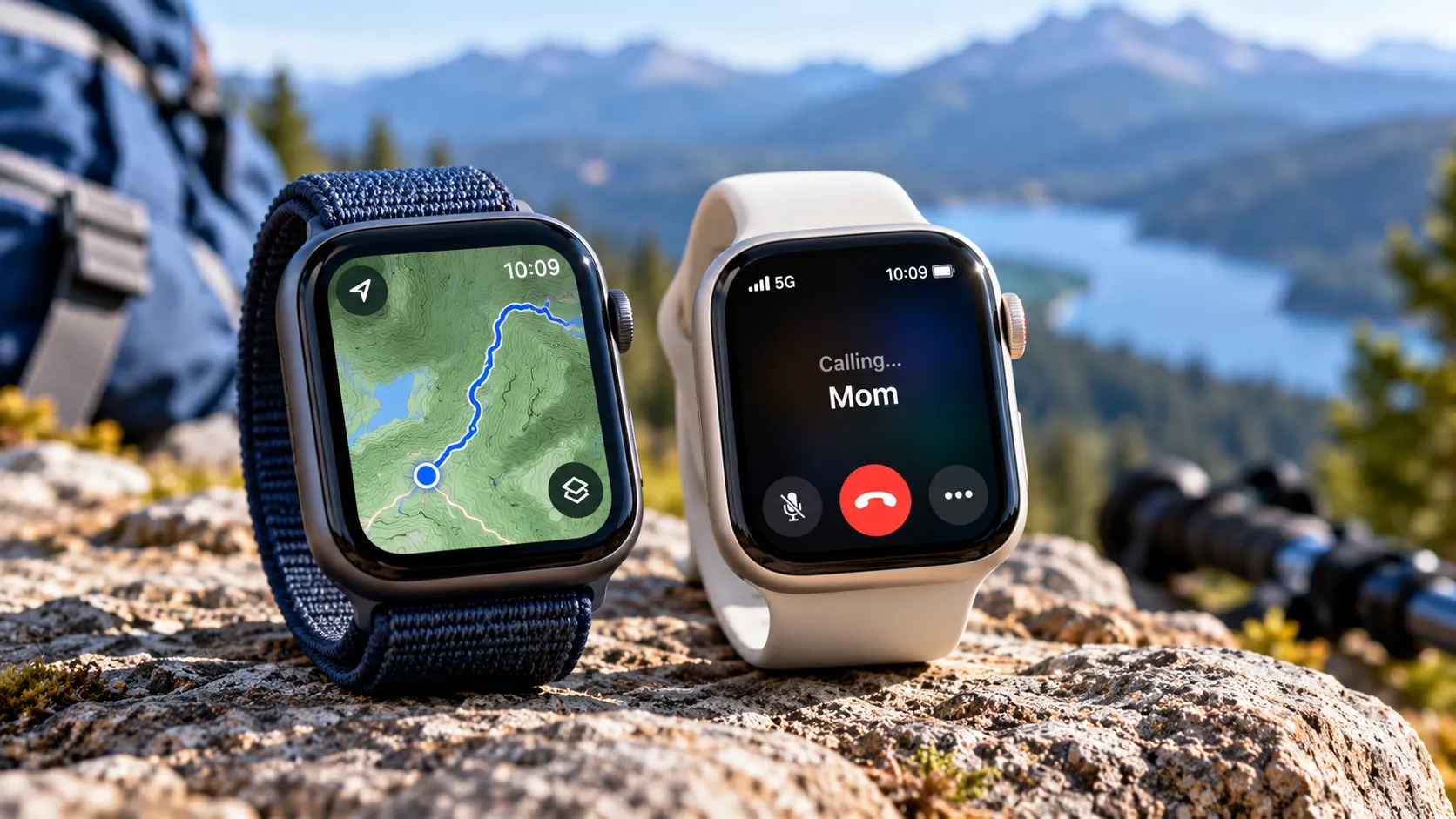
What is not theoretical is the surface area. Siri AI runs natively across iOS 27, iPadOS 27, macOS 27, watchOS 27, visionOS 27, Spotlight, CarPlay, and AirPods, per the live recap. iOS 27 extends support back to the iPhone 11, meaning Apple isn't cutting any currently active iPhones from eligibility. No competing assistant runs natively across a phone, tablet, laptop, smartwatch, car dashboard, and wireless earphones, from a single provider, under a unified privacy model. That breadth is the product of two decades of hardware and software built together. Siri AI is the first product designed to use all of it simultaneously.
The practical payoff is unglamorous and specific. You're driving, you ask Siri through CarPlay about your afternoon, and it surfaces a flight time from an email and a meeting conflict from your calendar, no app switching, no phone unlocking, no standing third-party access to your accounts. That's not a keynote demo scenario. That's what the integration argument means in ordinary daily use.
Engadget podcast WWDC 2026 and the Tim Cook legacy question
The Engadget panel at Apple Park didn't treat Tim Cook's legacy as a sidebar. They named it as one of the two central topics of their episode, alongside the Siri launch itself. That framing reflects something real.
Cook's tenure has been defined by execution discipline: supply chains, hardware margins, platform coherence. The AI era is testing something different, whether Apple can build software that competes at the frontier, not just iterate on what competitors proved first. The first Siri AI announced two years ago was a public promise that went unfulfilled. WWDC 2026 is Apple's first substantive answer, and the sequencing of its rollout looks like a deliberate response to that credibility problem. Developer testing opened this week, a public beta follows next month, and the full consumer release arrives this fall alongside every major platform update, per The Verge. That's a staged rollout designed to surface problems before they reach hundreds of millions of users.
One voice in the live recap described this as Cook's final WWDC keynote, a claim unsupported by any published reporting and worth treating with caution. The legacy stakes, though, don't require confirmed succession news to be real. A Siri AI that ships on schedule and behaves in consumer hands the way it behaved in The Verge's hands-on session would represent a credible recovery for Apple's AI narrative under Cook. That's a lower bar than industry leadership. It's also a bar Apple previously failed to clear, twice. "It works" and "It will actually ship to customers" were the two targets Apple couldn't afford to miss, The Verge noted, and right now, in a developer beta, both appear to be true.
The fall test and the specific behaviors that will decide it
Siri AI launches with meaningful constraints. It's English-only at launch, unavailable on iOS and iPadOS in the EU and entirely absent from China due to regulatory hurdles, and server-dependent features carry daily usage limits, with expanded access gated behind iCloud+ subscription tiers, as The Verge reported. Those constraints don't undermine the product, but they do narrow who experiences Apple's platform-wide transformation when iOS 27 ships. Every prior WWDC Siri announcement looked credible in a controlled environment too.
The real verdict will come from three observable behaviors, each tied directly to what the hands-on evidence showed.
First: do users start letting Siri manage calendar and inbox lookups instead of opening Gmail or Google Calendar manually? The privacy architecture only pays off if users trust it enough to actually use it. That trust has to be earned at scale, not in a demo room at Apple Park.
Second: does the cross-device continuity materialize in practice? The iPhone-to-CarPlay-to-AirPods integration runs on the same platform breadth that no rival currently matches, per the live recap, but breadth on paper and daily habit are different things. The question is whether users actually engage Siri across devices or revert to their phones for anything substantive.
Third: do people stop reflexively reaching for Google Search for quick, contextual questions that Siri AI is now built to handle? This is where the "Gemini, circa 2025" framing becomes relevant in a new way. If the features are genuinely comparable to what Gemini has offered for a year, and they run inside a privacy architecture users prefer, the argument for shifting default behavior becomes real, not because Siri is more capable, but because it's good enough and better contained.
Apple doesn't need Siri to beat Gemini feature-for-feature. It needs users to trust it enough to become the default assistant inside Apple's own hardware stack. That's the narrower thesis, and it's the only one the evidence actually supports. If those three behaviors shift measurably this fall, WWDC 2026 becomes a genuine inflection point. If they don't, it becomes the best demo Apple has shipped in this category, which, given the previous two attempts, is still progress. Just not the kind that rewrites the competitive map.


Comments
Be the first, drop a comment!