



Apple HomeView apps: which ones need your iPhone first
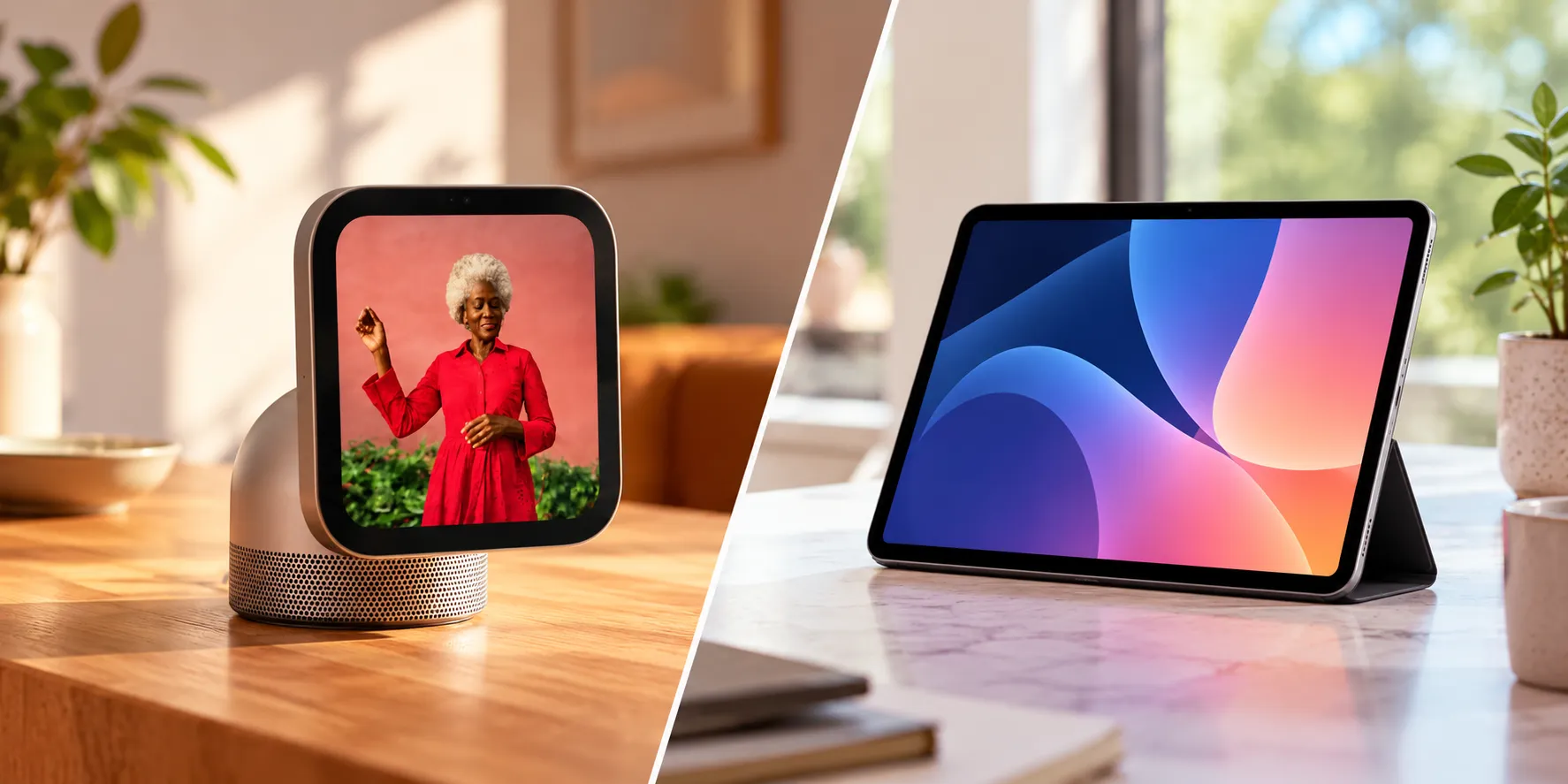
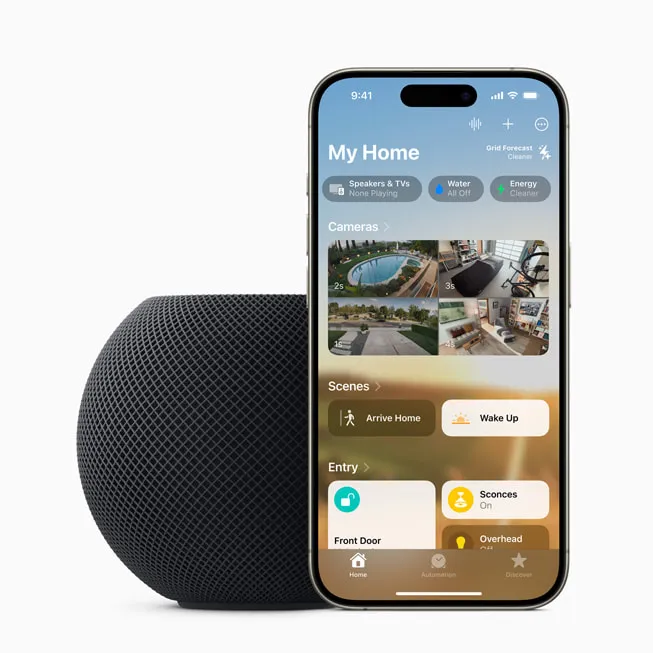
Apple's HomeView looks like an iPhone bolted to your kitchen wall: a familiar grid of app icons and widgets, no fumbling for new gestures. But before handing over $299, it's worth asking a sharper question than "does it have an app store?" The real issue with Apple HomeView apps is that several of the most heavily marketed ones, including some made by Apple itself, don't run independently on the display at all. Macworld reported that Apple never demonstrated how its promoted entertainment apps actually behave on HomeView, not in a single demo video or live showcase at its media event (Macworld, 1 day ago).
HomeView ships with a curated set of 14 apps (15 if Settings counts) and no App Store to add more (Macworld, 1 day ago). It runs on the same A18 chip found in the iPhone 16 (The Verge, 2 days ago), costs $299, and goes on sale November 13 (WIRED, 3 days ago). None of this has been independently tested yet, since review units aren't out. Everything below comes from Apple's spec pages, press materials, and pre-release reporting, and the gaps in what Apple has disclosed about its own entertainment apps are part of the buying decision, not a footnote to it.
Sort the apps available on Apple HomeView by how each one actually reaches the screen, and a pattern shows up fast. A small group runs natively on the device. Another group, including some of Apple's own services, is listed as "available from iPhone" with the exact delivery method still unconfirmed. A third group covers third-party apps that only appear through an existing CarPlay connection to a paired iPhone. Buyers who mainly want Home control, FaceTime, Safari browsing, and Apple Music should get what Apple's published materials describe. Buyers picturing an independent kitchen or living-room streaming screen should wait for hands-on reviews before assuming HomeView delivers that.
Which Apple HomeView apps run on the display, and which need an iPhone?
Apple's tech specs page for HomeView lists its curated apps alongside four Apple apps explicitly marked "Available from iPhone": Apple TV, Apple Books audiobooks, Apple Music Classical, and Apple News Plus (Macworld, 1 day ago). FaceTime, Messages, Safari, Music, and Podcasts sit in HomeView's built-in catalog, distinct from that "available from iPhone" group (WIRED, 3 days ago). Apple hasn't spelled out the technical line between the two groups, but the labeling itself tells buyers which apps to expect working on the hardware alone and which ones lean on a nearby phone.
The delivery mechanism behind the "available from iPhone" apps isn't something Apple has stated outright. Macworld's read, based on developer documentation rather than an Apple statement, is that all four apps operate through their CarPlay interface (Macworld, 1 day ago). If that holds up, watching Apple TV or reading an Apple News Plus story on HomeView would work the same way CarPlay routes content through a connected iPhone in a car, just aimed at a wall display instead of a dashboard.
HomeView third-party apps sit in a separate lane. Existing CarPlay audio and video apps are expected to show up on HomeView automatically through a paired iPhone, with no new app needed, unless a developer specifically opts out using the disfavoredLocations function (Macworld, 1 day ago). Spotify is the one confirmed example right now. WIRED describes only "a handful" of third-party media apps as available at this point, with no thorough, confirmed list of what else lands on day one (WIRED; 9to5Mac, 3 days ago).
That three-way split, not the missing Apple HomeView app store, is the detail that should shape a buying decision. A general app store was never really on the table for a hub like this one. What matters is whether the specific app a buyer cares about falls into the native bucket, the iPhone-dependent bucket, or the CarPlay bucket, since each comes with different assumptions about whether a phone needs to be in the room.
Why Apple's own entertainment apps are the clearest HomeView app limitation
HomeView doesn't natively support any video app at launch, "not even Apple's own" (The Verge, 2 days ago). Apple TV requires an iPhone connection rather than running directly on the display, a strange gap for a company showing off its own streaming service on its own hardware.
There's no YouTube, Netflix, or Disney+ app either. Video on HomeView currently runs through the Safari browser unless those companies bring their apps over through the CarPlay path themselves (WIRED, 3 days ago). Competing smart displays already clear this bar without a phone in the loop: Amazon's Echo Show streams Prime Video natively, and Google's Nest Hub plays YouTube the same way, no paired device required (The Verge, 2 days ago).
There's a reasonable defense of the missing app store. Most smart home hubs skip a general app ecosystem, and Apple can fairly argue HomeView was never meant to double as an iPad on a stand (The Verge, 2 days ago). That argument covers third-party developers who haven't built for the platform yet. It doesn't explain why Apple's own TV and News Plus apps aren't native, since that's not a gap Apple can pin on anyone else's engineering choices. The Verge said it asked Apple for clarification on why those apps require an iPhone connection, and no response was included in its report (The Verge, 2 days ago).
This is where Apple's marketing runs ahead of what's confirmed. The pitch includes keeping an eye on a match while doing the dishes, but the apps most likely to deliver that scenario aren't independent of a nearby phone yet. Anyone sold on that image should know it currently depends on an iPhone being in range and connected.
HomeView CarPlay apps: what's confirmed and what's still unclear
Apple's CarPlay developer documentation has already been updated to describe how CarPlay audio and video apps work with HomeView, and the framework goes deeper than one blanket rule (Macworld, 1 day ago). Section 6.4.1 of Apple's developer agreement covers CarPlay widgets appearing on HomeView without the audio-or-video restriction, while section 6.4.2 covers full CarPlay apps and ties that access to categories Apple identifies, which appears to mean the same audio and video apps mentioned elsewhere (Macworld, 1 day ago). That's a more layered system than "CarPlay apps just work," and it suggests HomeView's third-party support leans on the existing CarPlay framework rather than something built from scratch, though Apple hasn't spelled out the full scope.
Apple's own product page echoes this, noting that HomeView supports "compatible third-party audio and video apps from your iPhone for a familiar experience across devices," with a footnote that "select apps require a paired and compatible iPhone nearby" (9to5Mac, 3 days ago). Apple hasn't detailed how that proximity requirement plays out day to day, or whether developers whose apps already support CarPlay's audio and video categories need to do anything extra to show up on HomeView (9to5Mac, 3 days ago).
One detail worth flagging for anyone who already uses CarPlay regularly: Apple only added CarPlay support for video apps while a car is parked in iOS 27, so the feature underlying HomeView's video story is itself fairly new territory for CarPlay as a platform (Macworld, 1 day ago). With roughly a month left before HomeView reaches store shelves, there's still room for Apple to show a clearer demonstration of how this bridge actually behaves (Macworld, 1 day ago).
What to check on your iPhone and region before buying
Setup and feature access depend heavily on which iPhone sits in the pairing role, and the requirements aren't uniform across every feature HomeView offers.
- HomeView can be set up using an iPhone, not an iPad. Older iPhones can still complete setup and use some general Siri AI functions, like broad knowledge questions (WIRED, 3 days ago).
- Personal-context Siri AI requests and the smarter app actions Apple demoed require an Apple Intelligence-capable iPhone, meaning an iPhone 15 Pro or newer (WIRED, 3 days ago).
- Apple's language confirms "select apps require a paired and compatible iPhone nearby" but doesn't explain how that proximity requirement behaves once a phone leaves the room (9to5Mac; The Verge, 2-3 days ago).
- HomeView isn't for sale in the EU right now, because Siri AI isn't currently available there in iOS (Apple Newsroom, 3 days ago).
These aren't abstract ecosystem footnotes. They're the specific checks worth running against an actual phone and region before assuming a given feature works the day HomeView arrives.
The purchase decision
HomeView's real app problem isn't the absence of an Apple HomeView app store. It's that a $299, A18-powered display is marketing an entertainment experience that, for several of its most visible features, including some of Apple's own apps, currently depends on a nearby and compatible iPhone, and Apple hasn't shown that workflow running in practice (The Verge; Macworld, 1-2 days ago).
9to5Mac said it also reached out to Apple for clarification on how third-party app support will work and hadn't heard back as of its report (9to5Mac, 3 days ago). The device doesn't reach customers until November 13, so none of this has been tested outside of Apple's own materials (WIRED, 3 days ago).
Before pre-ordering, confirm which iPhone would actually pair with HomeView and whether it supports Apple Intelligence if personal-context Siri matters. Check whether the specific media apps in daily rotation already support CarPlay, since that's the path third-party access runs through. Confirm the region supports both sale and Siri AI, since EU buyers are locked out entirely for now. Anyone whose use case is Home control, FaceTime, Safari, and Apple Music should find HomeView ready to deliver on day one. Anyone picturing an independent streaming screen for the kitchen or living room should hold off on pre-ordering until review units confirm how the CarPlay bridge performs outside of a spec sheet.


Comments
Be the first, drop a comment!