



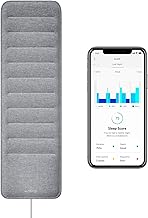


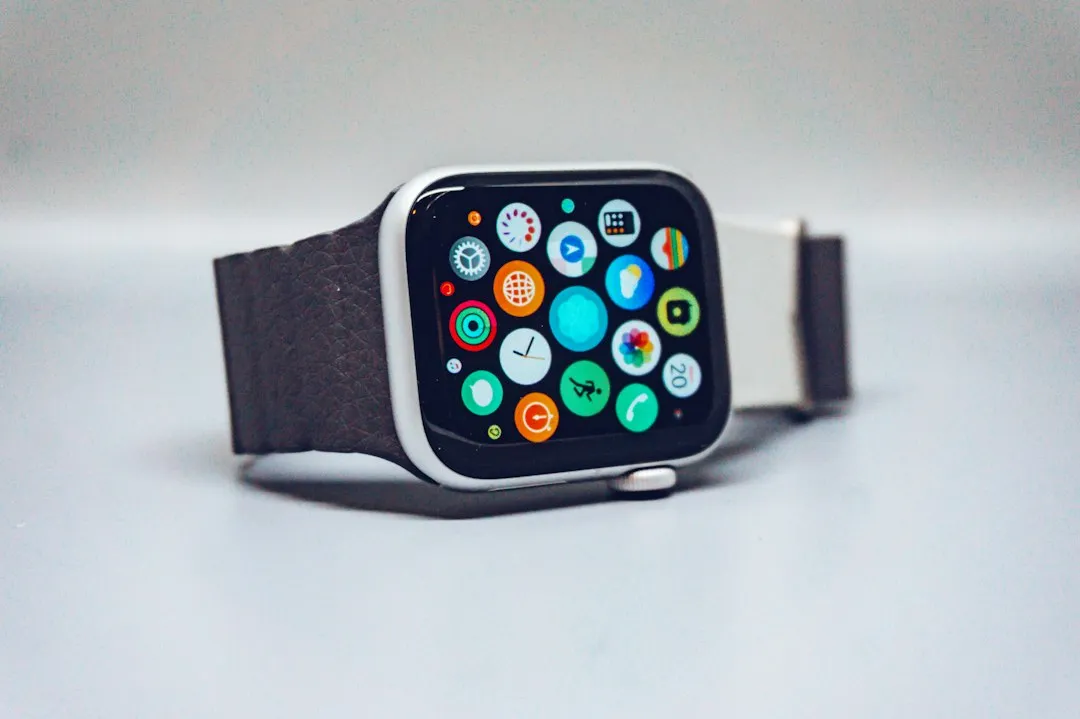
A single number is easier to understand than a night full of sleep charts. That was the appeal when Apple introduced Sleep Score with watchOS 26 in September 2025, giving Apple Watch users a nightly rating from 0 to 100 instead of leaving them to interpret sleep duration, wakefulness, and consistency on their own.
Apple now explains the broad formula behind that number: sleep duration contributes up to 50 points, bedtime consistency 30, and interruptions 20. That makes Sleep Score far less mysterious than it first appeared.
But the score still isn't completely transparent. Apple doesn't publish the finer-grained calculation showing exactly how a particular bedtime shift, amount of sleep, or period of wakefulness changes the final number. And with Sleep Score now feeding Apple's new Readiness metric on its latest watches, understanding what that nightly rating actually represents has become more useful than ever.
How Apple calculates your Sleep Score
Apple's current Sleep Score documentation divides the nightly rating among three components: sleep duration accounts for half of the possible 100 points, bedtime consistency contributes 30, and interruptions make up the remaining 20.
The final number then falls into one of five classifications. Scores from 0 to 40 are Very Low, 41 to 60 are Low, 61 to 80 are OK, 81 to 95 are High, and 96 to 100 are Very High.
That breakdown immediately tells you something important about Apple's approach. Half of the entire score comes from how long you sleep. Bedtime consistency accounts for another 30%, meaning those two factors alone make up 80% of the total.
The calculation also looks beyond a single night. Bedtime consistency considers when you fell asleep over the previous 13 nights, while the interruption component accounts for both how often the watch determines you woke up and how long those periods lasted.
What Apple doesn't provide publicly is the full point-by-point conversion inside those categories. You can see that sleep duration is worth 50 points, for example, but not precisely how seven hours of sleep would score compared with seven and a half hours. The same goes for going to bed 30 minutes later than usual or waking several times during the night.
That distinction matters because the score can look more exact than the public methodology actually is. An 82 and an 84 appear highly specific, but Apple's consumer documentation doesn't show the mathematical steps separating those numbers.
Sleep Score also isn't exclusive to Apple Watch Series 11. Apple's current Watch comparison tool lists the feature on older hardware including Apple Watch Series 6 and Apple Watch SE 2. That makes it largely a software benefit rather than a reason by itself to upgrade to the Series 11 generation.
Apple says the scoring approach was informed by guidance from the American Academy of Sleep Medicine, National Sleep Foundation, and World Sleep Society. In its September 2025 Series 11 announcement, the company also said more than 5 million nights of sleep data from the Apple Heart and Movement Study were used to develop and test the scoring algorithms.
Those details explain the basis for Apple's scoring priorities, but they don't establish that a particular score corresponds to a clinically defined level of sleep quality. Apple does not publish a clinical accuracy figure for the composite Sleep Score in its consumer-facing documentation.
There's another distinction worth keeping in mind. Apple Watch separately tracks sleep stages such as REM, Core, and Deep sleep, but those stages aren't listed as individual components in the published 100-point formula. The three components Apple specifies are duration, bedtime consistency, and interruptions.
That means a lower score doesn't necessarily tell you anything specific about how much Deep or REM sleep you got. Those measurements may still be useful on their own, but Apple doesn't present them as standalone pieces of the Sleep Score calculation.
Sleep Score isn't the same as a readiness score
A Sleep Score also shouldn't be compared directly with every other health or recovery score produced by a wearable.
Fitbit's Daily Readiness score, for example, uses recent sleep, resting heart rate, and heart rate variability to estimate recovery. Oura's Readiness Score draws from sleep quality, physiological signals, and activity data to assess how prepared the wearer is for the day.
Those are broader recovery assessments. Apple's Sleep Score has a narrower purpose: summarizing a night's sleep around duration, bedtime consistency, and interruptions.
That distinction became more important on Sept. 9, 2026, when Apple announced a separate Readiness metric for Apple Watch Series 12 and Apple Watch Ultra 4.
In its Sept. 9 health and fitness announcement, Apple said Readiness analyzes recent activity, training load, vitals, and Sleep Score to produce a daily rating from 0 to 10.
The feature then provides one of four recommendations: Recover, Pace Yourself, Ready, or Go For It. The score can change during the day as new data comes in, including an intense workout or a shift in daytime vitals.
That creates a much clearer hierarchy within Apple's health features. Sleep Score summarizes the night's sleep. Readiness takes that result and combines it with additional information to estimate how prepared the body is for the day.
It also raises the stakes of understanding what Sleep Score actually represents. On Apple's newest watches, the nightly number is no longer only an isolated sleep summary; it becomes one of the inputs behind a broader recovery recommendation.
What independent sleep research actually tells us
Independent research can offer context on the measurements beneath these kinds of scores, but it doesn't validate Apple's current Sleep Score algorithm itself.
A March 2025 study in SLEEP Advances compared six consumer wearables, including Apple Watch Series 8, with polysomnography, the laboratory standard used for sleep measurement and staging.
The study predates Apple's Sleep Score feature, so its findings apply to the underlying sleep tracking rather than the newer composite rating.
The devices were much better at identifying sleep than wakefulness. All six detected more than 90% of sleep epochs, while specificity for identifying wakefulness ranged from about 29% to 52%. In practical terms, a wearable may recognize sleep reliably while still misclassifying some periods of wakefulness.
Agreement was more mixed when the devices had to distinguish among sleep stages. Cohen's kappa values ranged from 0.21 to 0.53 across the six wearables, indicating fair to moderate agreement with polysomnography.
Apple Watch Series 8 recorded the highest kappa value in the study at 0.53, compared with 0.42 for Fitbit Sense and 0.41 for Fitbit Charge 5. The researchers concluded that devices with stronger agreement, including the Series 8, could still be useful for following substantial changes in sleep architecture over time.
Those results should not be read as an accuracy test of Sleep Score. They cover an older Apple Watch, evaluate sleep-stage classification rather than Apple's composite rating, and predate the feature entirely.
That distinction is easy to miss. A wearable can perform reasonably well at identifying whether someone is asleep without that automatically validating a proprietary score built on top of those measurements.
What your Sleep Score can — and can't — tell you
Apple's published formula makes one thing especially clear: most of the score comes from factors users can readily identify in their own routines. Half of the available points come from sleep duration, another 30% from bedtime consistency, and the remaining 20% from interruptions.
There are therefore concrete places to look when the score changes. A later-than-usual bedtime can affect consistency. A shorter night can reduce the heavily weighted duration component. More frequent or longer periods of wakefulness can lower the interruption portion.
A disappointing score also isn't automatically evidence that you had too little REM or Deep sleep. Apple records those stages separately, but its published scoring breakdown doesn't give either one its own portion of the 100 points.
The final number still has limits. Apple Watch estimates sleep from signals collected at the wrist, and Apple's public documentation doesn't reveal every step between those measurements and the finished score.
That doesn't make Sleep Score useless. It simply makes the trend more informative than the illusion of precision in any one nightly number.
For everyday use, knowing why the score moved is more useful than fixating on whether one night earned a 79 or an 82. The real value is in what sits underneath it: how long you slept, how consistent your bedtime was, and how interrupted the night became. Seen over time, those patterns can tell you far more than any single number on your wrist.

Comments
Be the first, drop a comment!