





iPhone Duo Software Features: Worth the Hardware Trade-Offs?
Apple's first foldable iPhone now has a price and a calendar. The iPhone Duo starts at $1,999 for 256GB, opens for preorder on October 16, and ships October 23 (MacRumors). Before that money changes hands, the real question for iPhone owners is whether the redesigned iOS 27 layout Apple built specifically for a folding display makes up for the hardware compromises that come with any first-generation foldable. The iPhone Duo software features shown off this week look more thought-out than the spec sheet underneath them (The Verge).
That gap between software polish and hardware realism runs through the hands-on coverage that followed Apple's event. Reviewers who spent time with the Duo describe the vertical layout, hinge-aware controls, and dual-screen camera tricks as genuinely built for the fold rather than stretched over from a flat iPhone. The same reports also flag a consistent set of trade-offs: a crease that hasn't fully vanished, a body heavier than Samsung's Galaxy Z Fold 8, no telephoto lens, and battery numbers that come from Apple's own testing rather than independent benchmarks.
This isn't a general foldable buying guide. It's written for people already invested in iPhone who are deciding whether the preorder is worth $1,999 and up. Android foldable owners will find useful comparison points along the way, but the core question here is narrower: does Apple's software case hold up well enough to justify this specific phone's price and physical trade-offs, or should buyers wait for retail units and independent reviews before committing.
Which iPhone Duo software features change daily use?
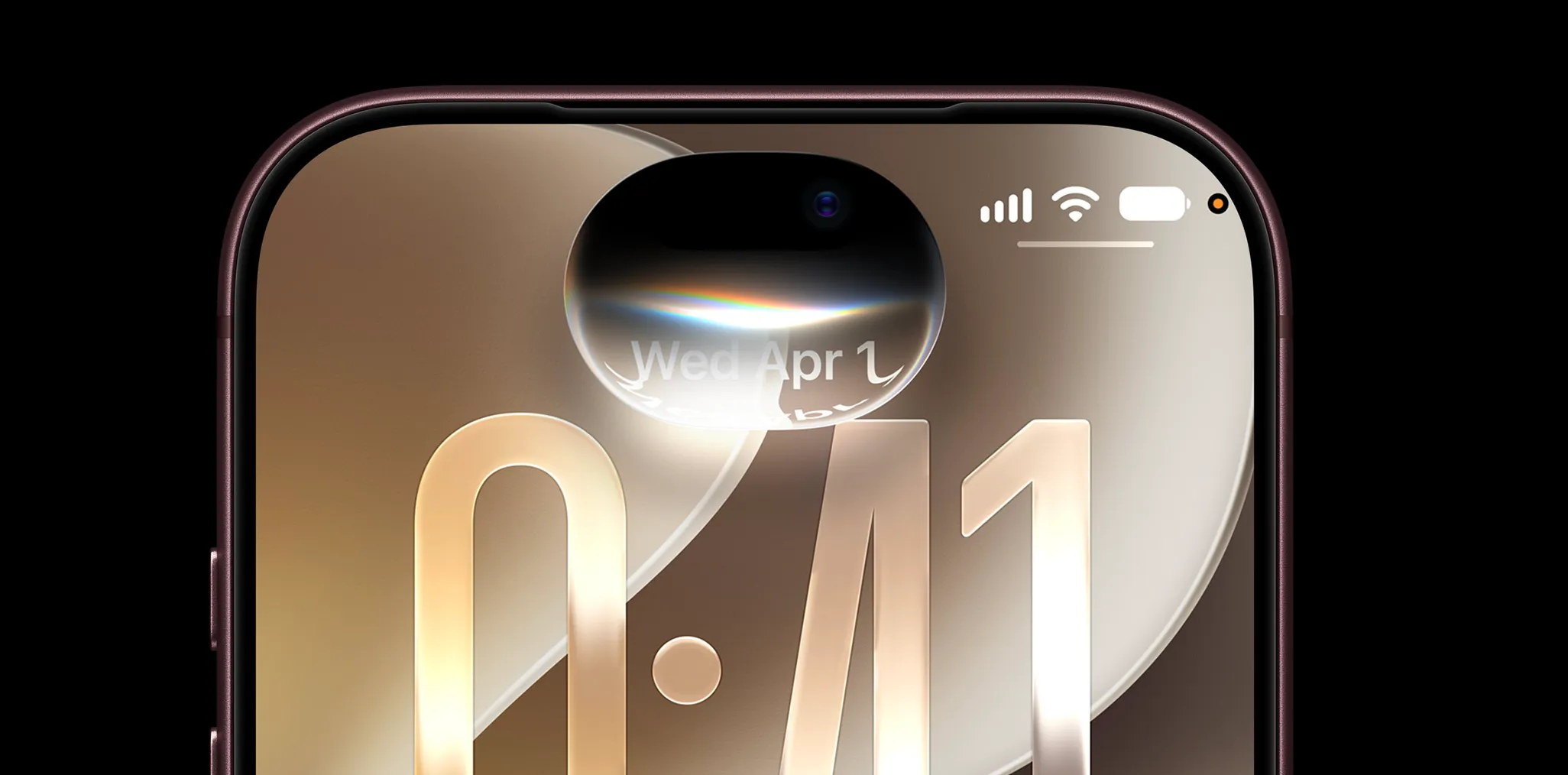
The version of iOS 27 running on the Duo isn't the same build as on a regular iPhone, and it doesn't match iPadOS either. The most visible change moves the dock off the bottom of the screen and stacks it vertically along the right edge, rotates the Dynamic Island to match, and shrinks the status bar into a small circular icon tucked in the corner (The Verge). MacRumors, working from a hands-on demo unit, described the result as putting "everything where you want it for one-handed use" (MacRumors).
What matters more than the layout itself is how consistent it stays across states. Apple designed the system so home-screen elements land in roughly the same spot whether the phone is open or closed, and The Verge's hands-on found that consistency, paired with a dynamic blur effect during the open-close transition, made switching between displays feel continuous rather than like flipping into a different mode (The Verge). Controls and content also shift based on fold angle and orientation, sliding away from the crease and retuning audio output depending on how the phone is positioned, according to MacRumors' direct observation at Apple's event (MacRumors).
The Duo is also the first iPhone to support the USB-C Apple Pencil, a notable first for anyone who wants to sketch or annotate on the 7.6-inch inner display (TechRadar). One open question that could matter for a meaningful slice of buyers: The Verge raised a concern that locking all navigation to the right edge might feel awkward for left-handed users, since none of the hands-on coverage so far confirms whether Apple built in an option to flip the layout to the other side (The Verge). If you're left-handed, that's worth testing in person before preordering rather than assuming a toggle exists.
The software tricks that only make sense on a fold
Some of the Duo's software only exists because the hardware folds, and this is where Apple's pitch is easiest to evaluate on its own terms. StandBy now activates in a half-open, tent-style position even when the phone isn't charging, turning the propped hinge into a bedside display with widgets, weather, calendar, and a new glow alarm clock (MacRumors). That's a demonstrated feature from Apple's own event, not a manufacturer projection about a future software update.
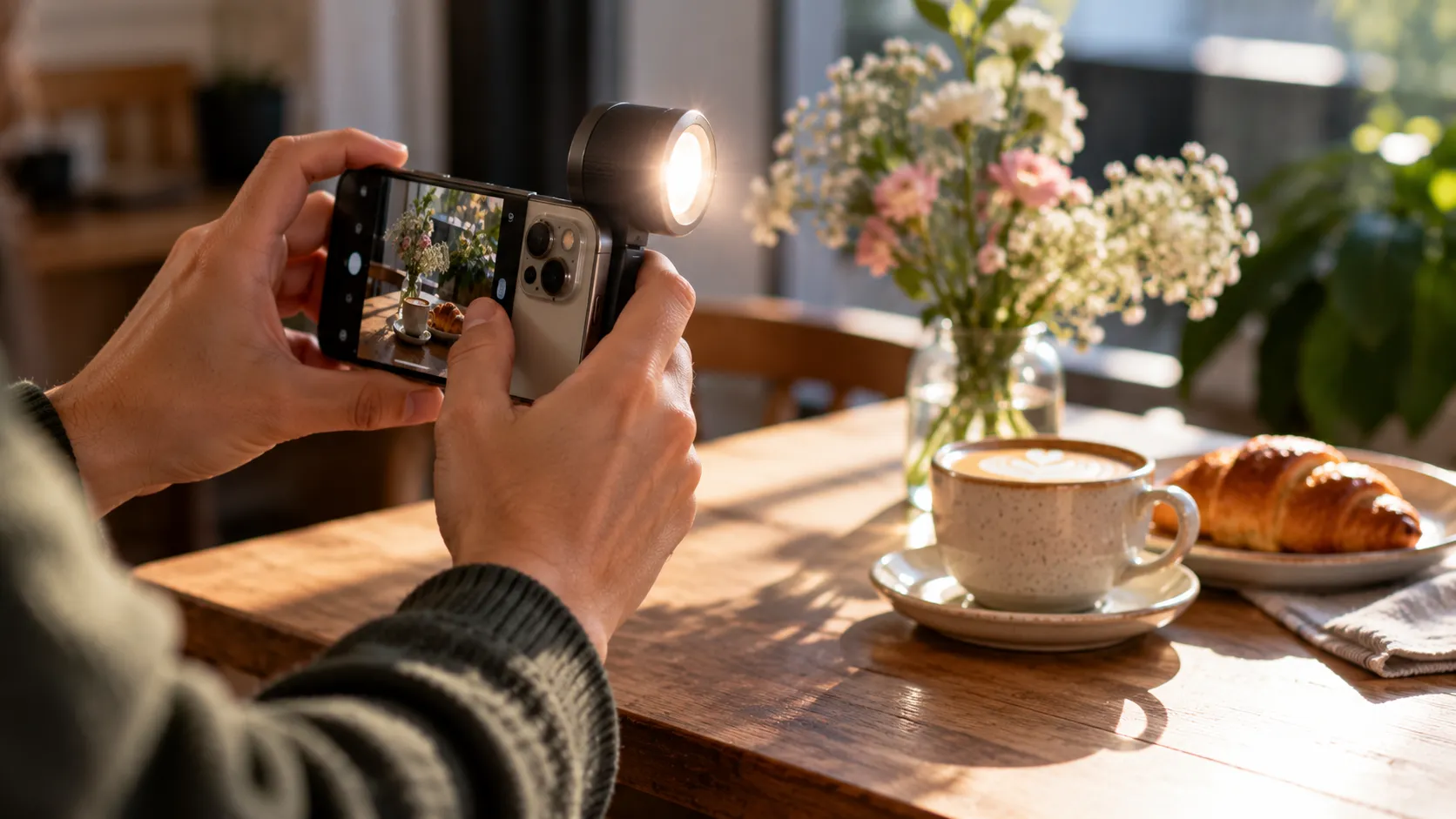
The camera system leans on the two-screen geometry directly. Duo Preview shows a photo's subject their own framing on the cover display, Kid Cue plays Peanuts animations on that same screen to hold a child's attention, and Smart Take uses on-device AI to fire the shutter automatically once everyone is in frame, all shown during Apple's hands-on demo (MacRumors). FaceTime Duo lets a second person join a call using the outer display's camera, so two people don't have to crowd around a single lens, a capability that depends on having two screens and two cameras to begin with (MacRumors).
Apple also added 4K Dolby Vision time-lapse recording, and MacRumors noted it "works well" with the Duo because the phone can prop itself up for longer shots (MacRumors). That's a real convenience, though it's worth being precise about what it proves: a tripod or a stand can achieve the same hands-free framing on a flat iPhone. The Duo's advantage is not needing to carry one, not a capability no other phone can replicate.
Apple iPhone Duo multitasking features stay limited to two apps
Software polish at the system level is one thing. Whether individual apps actually take advantage of a folding screen is a separate, unresolved question, and it's the biggest gap between Apple's demo and what a buyer will experience with the apps they use every day.
Apple has publicly demonstrated Duo-specific behavior in three named third-party apps: Netflix, Slack, and Zoom. Netflix repositions its playback controls to the bottom edge when the phone sits in a half-open posture, and the other two adapt in similar ways depending on how the hinge is flexed (Tom's Guide; The Verge). That's confirmed, developer-built optimization for three apps, not evidence that the broader App Store ecosystem has done the same work. The Verge's hands-on found that most apps do little to take advantage of dual displays, multiple cameras, or tent-mode postures, meaning the system adapts automatically at the layout level, but individual apps don't gain Duo-specific behavior without a developer actually building it in (The Verge).
Split-screen multitasking on the Duo currently supports two apps at once, including two windows of the same app, with the option to save an app pair so it relaunches together later. Neither window resizes; each is locked to exactly half the inner display (MacRumors). Set against Samsung's Galaxy Z Fold 8 and other Android foldables, which already support three simultaneous split-screen apps and often allow resizable floating windows, Apple's multitasking ceiling looks more constrained on paper (The Verge). If your workflow depends on juggling more than two apps at once, or on resizing panes to fit a task, that's a real limitation today, not a bug Apple is likely to patch before launch.
The practical test for a prospective buyer is simple: open the list of apps used daily and check whether any of them have announced Duo support. If the answer is "just the ones Apple already demoed," the software case for this specific phone gets weaker fast.
The iPhone Duo crease and hinge still show under scrutiny
None of the software above changes what the phone weighs, how it's built, or what its cameras can do, and this is where the trade-offs get physical rather than fixable with an update.
Apple's anti-crease approach combines a 100-component hinge, viscoelastic adhesives that let display layers glide over each other, and a nano-texture polymer layer applied pixel by pixel with laser lithography to cut glare and mute the visible fold line (The Verge; MacRumors). The pre-launch impressions of that engineering don't fully agree. The Verge's editor-in-chief said the crease "can't really be seen" but "can definitely be felt if you go looking for it," MacRumors found it "still visible in certain lighting" though better hidden than Samsung's effort, and TechRadar called it simply "gone" (The Verge; MacRumors; TechRadar). Those are three brief hands-on sessions with the same class of demo unit, not independent testing over weeks of daily folding, so treat them as a range of first impressions rather than a settled verdict.
It's also worth putting Apple's crease work in context rather than treating it as a first-mover breakthrough. Samsung already made major progress on its Z Fold 8 and Z Fold 8 Ultra using new titanium display layers, and Oppo used 3D printing to fill the gaps across its Find N6 hinge before Apple ever entered this market (The Verge). Apple's version may be competitive, but the reporting doesn't support the idea that it solved a problem the rest of the industry hadn't already been chipping away at.
Weight is a more concrete number. At 254 grams, the Duo is 26% heavier than Samsung's Galaxy Z Fold 8, a 53-gram difference The Verge calls "noticeable" in hand, and you'd have to go back to Samsung's 2022 Z Fold 4 to find a comparably heavy foldable from that lineup (The Verge). Closed, the Duo's 5.4-inch cover display is also smaller than the standard iPhone 18 Pro's screen (MacRumors), which matters most for anyone who expects to use the phone folded for the bulk of the day rather than opened flat.
The camera system is another place where the specs undercut the software story. The Duo carries just two 48-megapixel sensors, a main and an ultrawide, with no telephoto lens at all; its 2x zoom is a digital crop from the main sensor rather than true optical zoom (MacRumors). Anyone who relies on optical zoom for portraits or distant shots should not expect the Duo's crop to match a dedicated telephoto lens.
Battery life sits in similar territory, backed by Apple's own numbers rather than independent measurement. Apple rates the Duo for up to 44 hours of video playback using the outer display or 31 hours on the main display (Tom's Guide), and there's no confirmed evidence Apple used silicon-carbon battery cells, a technology Samsung, Motorola, and Honor already use to pack more capacity into foldable bodies (The Verge). Honor's Magic V6, which does use silicon-carbon cells, is cited at roughly two full days of use, a bar the Duo's figures don't clearly clear (The Verge). None of this is a scandal; it's simply the difference between a company's stated ratings and a battery drain test run by someone with no stake in the number.
Preorder or wait: what the evidence actually supports
The software case for the iPhone Duo is real. The vertical layout, hinge-aware controls, StandBy tent mode, and dual-screen camera features like Duo Preview and FaceTime Duo are built specifically for a folding iPhone, not repurposed from a flat one, and that shows in every hands-on report that's run so far. But that case rests heavily on third-party developers doing work Apple has only demonstrated in three named apps, and on a fixed two-app split-screen system that Android foldables have already outpaced with resizable, three-app multitasking.
Every crease, weight, camera, and battery claim in circulation right now comes from brief, controlled hands-on sessions or from Apple's own published ratings. None of it comes from weeks of daily folding, independent battery drain tests, or long-term hinge durability checks, so treat the current coverage as a first look rather than a verdict.
Preorder on October 16 only if the apps you actually use match what Apple has shown working on the Duo, and if a fixed 50/50 split-screen covers your multitasking needs. If a telephoto lens, two-day battery life, or proof that the crease holds up after months of folding are deal-breakers, wait for retail units and independent reviews after the October 23 launch instead of buying on the strength of a demo unit.

Comments
Be the first, drop a comment!